Investing in Uptown Chicago Multi-Unit & Courtyard Buildings
March 24, 2026
March 24, 2026
Wondering if Uptown’s classic courtyards and multi-unit buildings belong in your portfolio? If you want renter demand, transit access, and value-add potential at North Side prices that still pencil, Uptown deserves a close look. You will see how to size rents, frame returns, budget renovations, and choose the right financing for both house-hackers and seasoned investors. Let’s dive in.
Uptown is a dense, North Side neighborhood with a high renter share and diverse tenant base. DePaul’s Institute for Housing Studies reports about 57,300 residents, with renters at roughly 70.9% of households and a majority aged 18–44, which supports steady leasing and turnover when you have the right unit mix. You can review the neighborhood profile for population, renter share, and age mix on the Uptown data portal from DePaul’s Institute for Housing Studies.
For rent benchmarks, recent RentCafe data lists Uptown’s average apartment rent around $1,761 per month as of February 2026. That figure blends studios through larger units, and individual buildings can trend higher or lower based on finish level, amenities, and proximity to transit and retail.
Transit is a core demand driver. Uptown has three CTA Red Line stations at Argyle, Lawrence, and Wilson, with 24-hour Red Line service to downtown. The Red and Purple Modernization program rebuilt the Lawrence and Argyle stations, with new stations opening on July 20, 2025. Better stations and frequency support long-term renter demand and value near the stops.
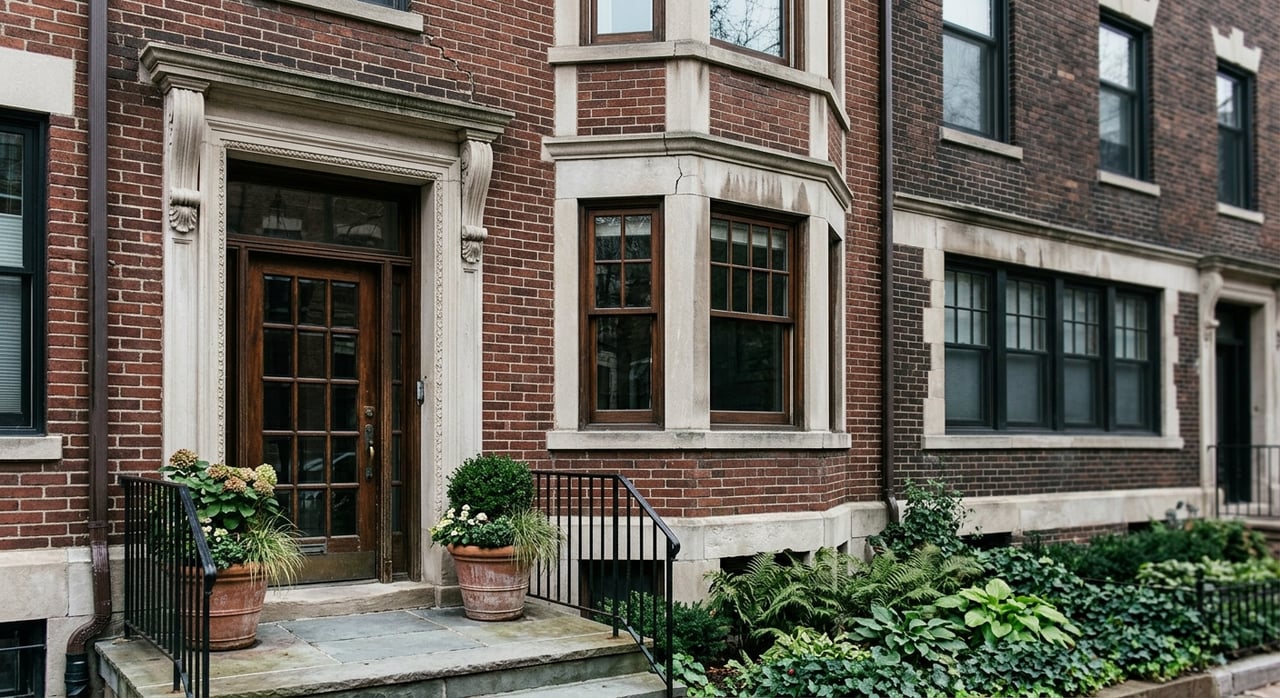
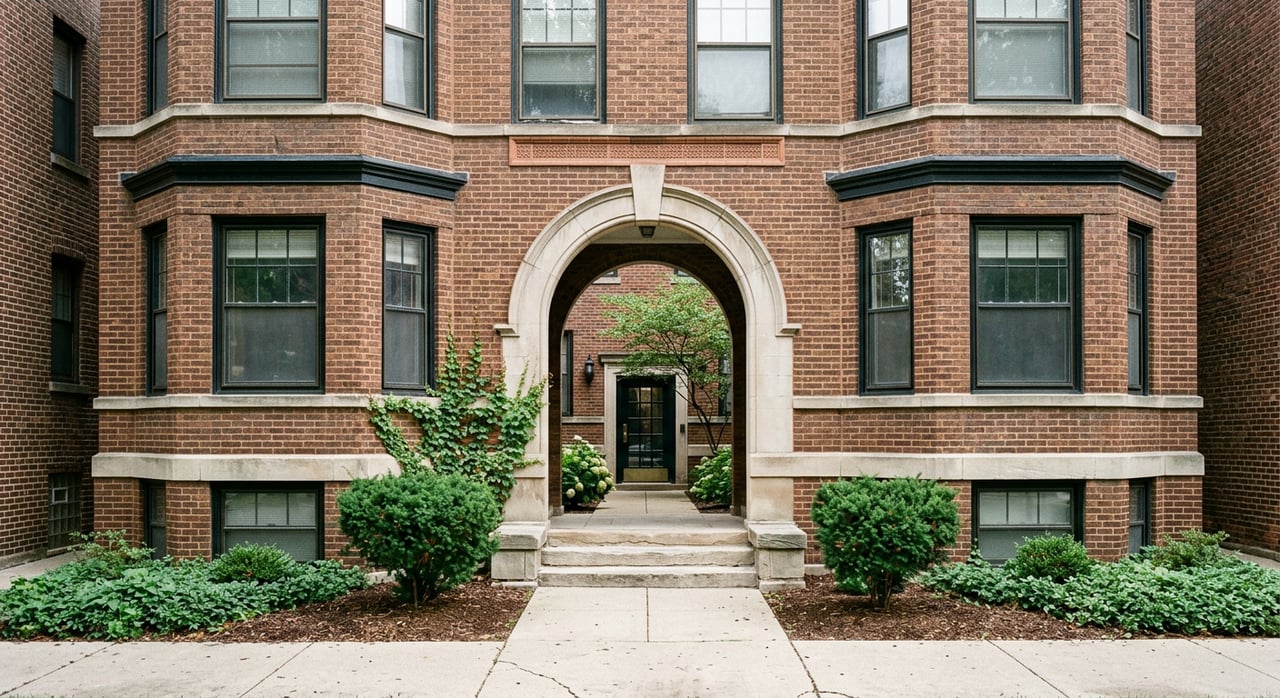
Uptown’s building stock includes vintage courtyards, six-flats and walk-ups, plus a mix of 2–4 unit buildings and mid-rise apartments. Many properties date to the early and mid-20th century, which is why you see masonry courtyards with shared light courts and basement mechanicals.
Operationally, older assets often share traits: vintage layouts, steam or hydronic boilers, limited in-unit mechanicals, and shared or basement laundry. Expect common capital needs like roof and tuckpointing, boiler and riser upgrades, window replacements, electrical panel updates, and façade work. Early scoping of mechanicals and envelope conditions is essential because near-term capex will shape cash flow in years one to three.
On the demand side, unit types that work well in Uptown include studios and 1-bedrooms for professional renters and students, and 2-bedrooms for roommates and small households. Garden or duplex garden units in courtyard buildings can command premiums when legal and well-finished. If you plan to live in one unit, 2–4 unit buildings remain a popular house-hack format because of favorable owner-occupied financing.
A practical note on rent growth assumptions: DePaul’s data also shows that about 46.2% of renter households in Uptown are cost-burdened. That does not mean you cannot achieve value-add premiums, but it does suggest you should match your renovation scope and pricing to the local income distribution and validate premiums with on-the-ground comps.
Start with the cap rate formula: Net Operating Income divided by purchase price. In recent reporting, Chicago’s core multifamily cap rates have averaged in the high 4% range, depending on class and stability. Small vintage courtyards or heavier value-add deals typically require higher returns to offset smaller scale, capex needs, and management intensity. A practical rule of thumb is to add about 150 to 400 basis points to prime core caps, which often places small vintage assets in a 6.5% to 9.0% range depending on condition and risk. Always compare to recent submarket sales before making an offer.
Institutional value-add programs provide helpful direction on unit-level math. Recent public investor disclosures show interior renovation costs often in the $14,000 to $22,000 per unit range for interior-only scopes, with observed rent premiums on renovated units commonly in the 16% to 22% range in select case studies. Your Uptown premiums will vary by micro-location, unit layout, and finish level, so pressure-test with current local comps before committing to a scope.
FHA, VA, and conventional owner-occupied loans typically support 1–4 unit purchases when you live in one unit. If you need acquisition plus rehab in one package, FHA 203(k) can be an option on 1–4 unit dwellings. Confirm current rules and loan limits directly with an approved lender.
For 5 to 50 unit properties, Fannie Mae and Freddie Mac small-balance programs often provide competitive terms, nonrecourse options, and standardized underwriting. Many North Side investors compare agency quotes to local bank terms before choosing a path.
Local bank portfolio loans, DSCR loans, and private lenders can fit quick closings or heavier rehabs. Structure and covenants vary, so sensitivity-test debt service at different interest rates and amortizations before you bid.
Illinois law preempts local rent control, so there is no Chicago-wide rent control regime in effect that sets caps on standard market increases. Chicago does enforce its own landlord-tenant ordinances and tenant protections that affect leasing, notices, and eviction processes. Review current state and local rules before you underwrite.
Parts of Uptown include landmarked buildings and local historic districts. Exterior modifications such as façade, windows, and cornices may require review and permits. Verify historic status early to avoid delays and scope changes.
Compared with Lakeview, Andersonville, or Lincoln Park, Uptown rents are generally lower, which can leave room for value-add alignment after renovations. That said, stabilized product in higher-priced neighborhoods may trade at lower cap rates because of perceived risk and liquidity differences. If your strategy targets cash flow plus medium-term appreciation, Uptown’s vintage stock near the Red Line can present a balanced profile.
Market research also notes Chicago’s modest new-construction pipeline relative to some major metros, which supports long-term rent growth in infill neighborhoods with strong transit access such as Uptown. Transit upgrades from the Red and Purple Modernization are a durable tailwind for nearby buildings.
If you are evaluating a courtyard or multi-unit in Uptown, start with a walk-through focused on envelope and mechanicals. Build two pro formas: current performance and post-renovation stabilization. Price a realistic renovation scope with a contingency, and compare multiple financing structures for cash-on-cash, DSCR, and exit flexibility. Finally, choose a micro-location strategy around Argyle, Lawrence, or Wilson that matches your renter profile and leasing plan.
A local advisor with North Side multifamily experience can streamline everything from unit-by-unit rent positioning to contractor introductions and lender options. If you want curated Uptown opportunities, renovation-aware guidance, and hands-on support from search to close, reach out to India Whiteside to schedule a neighborhood consultation.
Stay up to date on the latest real estate trends.